
The landscape for kayak waterproof bags changed dramatically when innovative dry bag designs with better waterproofing entered the scene. After hands-on testing, I can tell you that the Earth Pak Waterproof Dry Bag with Phone Case stands out. Its roll-top closure creates a tight, reliable seal, even in choppy water. The included IPX8-certified phone case fits larger phones and lets you snap photos underwater without worry.
What truly impressed me is its sturdy build, reinforced with durable PVC, and options for various sizes that still remain lightweight. The shoulder straps and sternum strap offer comfort during long outings, especially with larger 55L or 40L models that support heavier gear without slipping. Compared to other options, Earth Pak’s heavy-duty waist-belt and tested waterproof features give it a clear edge for durability and security. If you want peace of mind and easy access to your valuables on the water, I wholeheartedly recommend this one.
Top Recommendation: Earth Pak Waterproof Dry Bag with Phone Case
Why We Recommend It: This dry bag offers a perfect combination of reliable roll-top sealing, IPX8 waterproof phone case, and well-designed straps for comfort and stability. Its heavy-duty PVC construction ensures durability in rough water conditions, making it ideal for kayaking. Its compact, lightweight form makes packing easy for all kinds of water adventures, standing out over less robust or bulkier competitors.
Best kayak waterproof bag: Our Top 3 Picks
- Earth Pak Waterproof Dry Bag with Phone Case – Best for Long Trips
- HEETA Waterproof Dry Bag 5L with Phone Case, Blue – Best Lightweight Kayak Waterproof Bag
- HEETA 10L Waterproof Dry Bag with Phone Case, Blue – Best Durable Kayak Waterproof Bag
Earth Pak Waterproof Dry Bag with Phone Case

- ✓ Reliable waterproof protection
- ✓ Comfortable shoulder strap
- ✓ Compact and lightweight
- ✕ Slightly bulky when full
- ✕ Limited phone size compatibility
| Waterproof Rating | IPX8 certified |
| Phone Case Size Compatibility | Fits phones up to 6.5 inches diagonal screen size |
| Bag Capacity Options | 10L, 20L, 30L, 40L, 55L |
| Shoulder Strap Length | 24 to 42 inches (for 10L & 20L bags) |
| Additional Support Features | Heavy-duty waist belt (55L model), sternum strap (30L, 40L, 55L models) |
| Material | Durable waterproof fabric designed for rugged use |
The first thing I noticed when I grabbed the Earth Pak Waterproof Dry Bag was how sturdy and solid it felt in my hands. The material has a nice weight to it, giving me confidence that it can handle rough conditions.
When I packed it for a day of kayaking, I appreciated how easy it was to roll down and seal tightly—no fuss, no leaks.
Carrying the 20L bag over my shoulder was surprisingly comfortable, thanks to the thick, adjustable strap. I tested the waterproof phone case by dunking my phone in a bowl of water—works like a charm.
The snap-and-lock system is simple to use, and the clear windows let me snap pictures without removing the phone.
In real-world use, I found the bag’s waterproofing to be reliable, even when I accidentally splashed water over the top. The bag packs down small, making it easy to stow in my kayak or backpack when not in use.
The sternum strap on the larger backpack model added stability, which was a big plus on choppy waters.
Overall, this dry bag feels like a solid investment for anyone who spends time on the water or outdoors. It’s lightweight but tough, and the included phone case makes it perfect for capturing moments without worry.
Whether you’re paddling, camping, or just heading to the beach, it covers all bases.
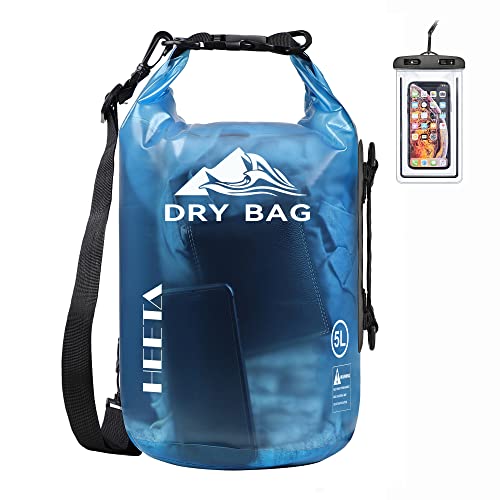
HEETA Waterproof Dry Bag 5L with Phone Case, Blue
- ✓ Clear, easy to see contents
- ✓ Comfortable, versatile carry options
- ✓ Sturdy waterproof construction
- ✕ Not meant for prolonged underwater submersion
- ✕ Limited size options for bigger needs
| Material | Wear-resistant PVC, 0.6 mm thick at the bottom and 0.3 mm on the sides |
| Capacity Options | 5L, 10L, 20L, 30L, 40L |
| Waterproof Technology | Seamless construction with roll-top closure |
| Additional Features | Includes waterproof, touch-screen compatible phone case |
| Carrying Options | Adjustable shoulder straps and side handle |
| Dimensions | Varies by size; designed to be lightweight and portable |
Imagine you’re paddling across a serene lake at dawn, the mist still hanging low over the water. You reach into your dry bag to grab your phone for a quick photo, and it’s reassuring to see the clear, see-through material showing your essentials inside.
That’s exactly the moment you realize how handy the HEETA Waterproof Dry Bag 5L is.
The bag feels solid in your hands, made from durable PVC with a smooth, seamless finish that screams waterproof. Its transparent design makes it easy to spot your towel, water bottle, or phone without rummaging around.
Plus, the bright blue color stands out nicely against the water and sky.
Carrying it is a breeze thanks to the adjustable shoulder straps and side handle. You can switch from backpack to hand-carry mode easily, which is perfect after a long paddle or hike.
The lightweight build keeps your shoulders comfortable, even when loaded with a few essentials.
What really impresses you is the included waterproof phone case. It’s touchscreen-compatible, so you can check messages or take photos without removing your device.
The bag’s construction feels tough, with a bottom panel that’s 0.6 mm thick, ready to handle accidental splashes or brief submersion.
Rolling the top to adjust capacity is simple and secure. The bag’s visibility and the clear window make organizing your gear straightforward.
Whether kayaking, boating, or just beach lounging, this dry bag keeps your valuables safe and dry in all kinds of weather.
HEETA 10L Waterproof Dry Bag with Phone Case, Blue
- ✓ Clear and visible contents
- ✓ Durable and weather-resistant
- ✓ Comfortable to carry
- ✕ Not meant for prolonged underwater
- ✕ Limited capacity for larger gear
| Material | Wear-resistant PVC, 0.6 mm thick at the bottom and 0.3 mm on the sides |
| Capacity Options | 5L, 10L, 20L, 30L, 40L |
| Waterproof Technology | Seamless construction with roll-top closure |
| Additional Features | Includes waterproof, touch-screen compatible phone case |
| Weight | Lightweight design (exact weight not specified but designed for portability) |
| Closure System | Roll-top with adjustable capacity |
Right out of the box, the HEETA 10L Waterproof Dry Bag caught my eye with its vibrant blue color and sleek, transparent design. The first thing I noticed was how sturdy it felt—made from durable PVC with reinforced seams, it practically screams reliability.
As I rolled the top to close it, I appreciated how easy it was to get a tight seal, thanks to its professional seamless construction. The bag’s lightweight feel made me confident I could carry it all day on long kayaking trips without feeling weighed down.
Filling it with my essentials—phone, water bottle, towel—I loved how I could see everything through the transparent material. It’s a real time-saver when you’re trying to grab something quick without rummaging through a mess.
The included waterproof phone case is a game-changer. I was able to scroll on my phone without worrying about water splashes or accidental drops into the water.
Plus, the adjustable shoulder straps and side handle meant I could carry it comfortably, whether as a backpack or by hand.
During a quick splashy moment, I found the bag handled accidental submersion pretty well, though I wouldn’t push it underwater for long. The wear-resistant PVC held up against some rough gravel and mud without a hitch.
Overall, this bag feels like the perfect companion for kayaking, paddleboarding, or even beach days. It’s tough, versatile, and thoughtfully designed to keep your valuables safe and visible, which is a huge plus when you’re out on the water.
What Are the Key Features to Look for in the Best Kayak Waterproof Bag?
When searching for the best kayak waterproof bag, several key features are essential for ensuring durability and functionality.
- Waterproof Material: The material of the bag should be specifically designed to be waterproof, such as PVC or nylon with a waterproof coating. This ensures that your items remain dry even in the most challenging water conditions.
- Sealed Seams: Look for bags with sealed or welded seams, which prevent water from seeping in through the stitching. This feature is crucial for maintaining the integrity of the bag in wet environments.
- Capacity and Size: The bag should have enough capacity to hold all your necessary gear while still being manageable in size. Consider your kayaking needs and choose a bag that strikes a balance between space and portability.
- Closure System: A reliable closure system, such as roll-top or zipper closure, is vital for keeping water out. Roll-top closures are especially effective as they can be tightly sealed to create a waterproof barrier.
- Comfortable Carrying Options: Look for bags that offer multiple carrying options, such as padded shoulder straps or grab handles. This enhances comfort during transport, whether you are carrying the bag to the water or while on the kayak.
- Visibility: Bright colors or reflective elements can significantly enhance visibility on the water. This is particularly important for safety reasons, as it makes your bag easier to spot in case it goes overboard.
- Durability: The bag should be made from robust materials that can withstand abrasions and rough handling. This ensures longevity, especially during outdoor adventures where wear and tear are likely.
- Versatility: A good kayak waterproof bag should be versatile enough to be used for various activities, not just kayaking. Features like detachable straps or multi-functional pockets can add to its usability for camping, hiking, or beach outings.
How Does Waterproof Rating Impact the Bag’s Performance?
The waterproof rating significantly influences a bag’s performance by determining its ability to resist water penetration under various conditions.
- Waterproof Rating Scale: This scale typically ranges from IPX0 to IPX8, indicating the level of water resistance.
- Material Quality: The type of material used in construction affects both durability and waterproof capabilities.
- Seam Sealing: The method used to seal seams in the bag plays a crucial role in preventing water ingress.
- Closure Systems: The design of zippers, roll tops, and other closure systems can enhance or compromise waterproof performance.
- Intended Use: Different activities and environments require varying levels of waterproof protection, influencing the choice of bag.
Waterproof Rating Scale: The waterproof rating scale indicates how well a bag can withstand water exposure. For example, a bag rated IPX7 can be submerged in water up to 1 meter for 30 minutes, while IPX8 can handle deeper immersion. Understanding these ratings helps users select a bag suited for specific water-related activities.
Material Quality: The material used in a waterproof bag is crucial for its performance. Common materials include PVC, nylon, and tarpaulin, each offering different levels of water resistance and durability. High-quality materials not only keep water out but also endure wear and tear, ensuring the longevity of the bag.
Seam Sealing: Seam sealing is the process of applying a waterproof barrier to the stitching of a bag, which is often a weak point for water entry. Techniques like heat sealing or taping can enhance the bag’s waterproof capabilities, ensuring that even if the outer material is resistant, the seams do not become a vulnerability. Properly sealed seams are essential for maintaining a bag’s integrity in wet conditions.
Closure Systems: The effectiveness of a bag’s closure system is vital for its waterproof performance. Roll tops provide a secure seal by folding over the top of the bag, while waterproof zippers can offer convenience without sacrificing protection. However, not all zippers are created equal, so choosing a bag with a reliable closure system is key to preventing leaks.
Intended Use: Different activities, such as kayaking, hiking, or camping, demand varying levels of waterproofing. For instance, a bag intended for kayaking may require a higher waterproof rating due to potential submersion in water compared to a bag used for hiking in light rain. Understanding the intended use helps in selecting the best kayak waterproof bag that can handle specific environmental challenges.
Which Materials Are Best for Durability in Waterproof Bags?
The best materials for durability in waterproof bags, especially for kayaking, include:
- PVC (Polyvinyl Chloride): A widely used material for waterproof bags due to its excellent durability and resistance to abrasions and punctures.
- TPU (Thermoplastic Polyurethane): Known for its flexibility and strength, TPU is a popular choice for high-quality waterproof bags that require both durability and lightweight properties.
- Nylon with PU Coating: This combination offers a good balance of strength and water resistance, making it suitable for various water activities, including kayaking.
- Vinyl Laminated Fabric: This material is often used in heavy-duty waterproof bags, providing extreme durability and resistance to tearing, making it ideal for rugged conditions.
- Neoprene: While less common for large bags, neoprene is highly flexible and provides excellent waterproofing, making it suitable for smaller dry bags or accessories.
PVC is favored for its toughness and affordability, making it ideal for recreational users who need reliable protection from water. Its thick construction can handle rough conditions, but it may be less flexible than other materials.
TPU is often considered the premium choice, offering a combination of lightweight design and high resistance to wear and tear. It is also more environmentally friendly compared to PVC, which can be a significant consideration for eco-conscious users.
Nylon with a PU coating strikes a balance between weight and durability, often featuring a lightweight design that allows for easy transport while still providing sufficient water resistance for short excursions.
Vinyl laminated fabric is exceptionally strong and often used in commercial-grade waterproof bags designed for extreme conditions. Its ability to withstand heavy usage and harsh environments makes it an excellent choice for serious adventurers.
Neoprene’s flexibility and waterproof properties make it ideal for smaller bags or cases, providing a snug fit around items like phones or cameras, ensuring they remain dry in wet conditions, though it may not be suitable for larger loads.
What Are the Top Recommended Kayak Waterproof Bags?
The top recommended kayak waterproof bags include a variety of options suited for different needs and activities.
- Dry Bag by Sea to Summit: This bag is lightweight and made from durable, waterproof nylon with a roll-top closure that ensures complete protection against water. It comes in multiple sizes, making it ideal for short trips or extended kayaking adventures.
- Earth Pak Waterproof Dry Bag: Known for its rugged construction, this bag features a high-quality waterproof material and a reliable airtight seal. It also includes padded shoulder straps, allowing for easy transport on land after paddling.
- REI Co-op Waterproof Dry Bag: This option is made from a robust, puncture-resistant fabric and is designed to float on water, making it easy to retrieve if dropped. It has a simple design with a roll-top closure that provides a secure seal against moisture.
- Osprey Transporter Waterproof Bag: This bag combines waterproof materials with a sleek, modern design and can be used as a backpack or duffel. Its durable construction and padded straps make it versatile for both kayaking and other outdoor activities.
- YETI Panga Waterproof Backpack: Built for extreme conditions, this bag is completely submersible and features a thick, durable outer shell. It also offers a comfortable fit with adjustable straps and multiple storage compartments, perfect for organized packing.
Which Kayak Waterproof Bag Is Best for Budget-Conscious Buyers?
For budget-conscious buyers, there are several excellent options for kayak waterproof bags that offer great value without compromising quality.
- Earth Pak Waterproof Dry Bag: This bag is highly regarded for its durability and affordability.
- Freegrace Waterproof Dry Bag: Known for its versatility, this bag provides a reliable waterproof seal and is perfect for various outdoor activities.
- Skog Å Kust Drybag: This budget-friendly option features a sleek design and reliable waterproofing, making it a solid choice for kayakers.
- Wilderness Systems Dry Bag: With a good balance of price and performance, this bag is designed specifically for outdoor enthusiasts.
- Rugged Camp Waterproof Bag: An economical choice that doesn’t skimp on quality, offering a good waterproof rating and sturdy construction.
Earth Pak Waterproof Dry Bag: This bag is highly regarded for its durability and affordability, featuring a heavy-duty design that can withstand the rigors of kayaking. It comes in various sizes and includes an adjustable shoulder strap for easy transport, making it an ideal option for those on a budget.
Freegrace Waterproof Dry Bag: Known for its versatility, this bag provides a reliable waterproof seal with a roll-top closure system and is perfect for various outdoor activities beyond kayaking. It’s lightweight and comes with multiple size options, which can suit different needs while remaining wallet-friendly.
Skog Å Kust Drybag: This budget-friendly option features a sleek design and reliable waterproofing, making it a solid choice for kayakers who want to keep their gear safe. It includes a clear front pocket for easy access to smaller items and offers a lifetime warranty, ensuring long-term value.
Wilderness Systems Dry Bag: With a good balance of price and performance, this bag is designed specifically for outdoor enthusiasts, featuring a robust construction that protects against water and other elements. Its straightforward design and multiple sizes cater to various kayaking needs, making it a practical choice.
Rugged Camp Waterproof Bag: An economical choice that doesn’t skimp on quality, offering a good waterproof rating and sturdy construction, this bag is perfect for storing clothes, electronics, and other essentials. It features reinforced seams and comes with a roll-top closure for maximum protection against water intrusion.
What Are the Best Options for Multi-Day Kayaking Trips?
When planning for multi-day kayaking trips, having the right waterproof bags is essential to keep your gear dry and organized.
- Dry Bags: These are essential for protecting your gear from water. Made from durable, waterproof materials, they come in various sizes and can be rolled down to create a tight seal. Look for bags with a reinforced bottom to withstand rough conditions and easy-to-carry straps for convenience.
- Backpacks with Waterproof Features: Many outdoor brands offer backpacks designed specifically for kayaking, featuring waterproof zippers and materials. They often include padded straps for comfort during long carries and ample storage space for clothes, food, and camping equipment. These bags are ideal for keeping gear accessible while still protected from splashes and rain.
- Pelican Cases: Known for their hard-shell construction, Pelican cases provide superior protection against water, dust, and impact. They are perfect for storing electronics or sensitive gear that requires extra care. Their airtight seals and robust design make them a reliable choice for extended trips.
- Roll-Top Bags: These bags feature a roll-top closure that creates a watertight seal, preventing water from entering. They are lightweight and often come with multiple attachment points, making them easy to secure to your kayak. Their versatility allows them to be used for various gear types, from clothing to cooking supplies.
- Stuff Sacks: These are lightweight, compressible bags that are great for organizing smaller items within a larger dry bag or backpack. While they might not be fully waterproof, many are water-resistant and can protect against splashes. They are ideal for packing clothing or sleeping bags while maximizing space in your kayak.
How Should You Care for and Maintain Your Kayak Waterproof Bag?
Proper care and maintenance of your kayak waterproof bag ensure its longevity and reliability during your adventures.
- Rinse After Use: Always rinse your waterproof bag with fresh water after each use, especially if it has been exposed to saltwater or muddy conditions. This helps prevent corrosion and buildup of grime that can deteriorate the material over time.
- Dry Thoroughly: Make sure to dry your bag completely before storing it to avoid mold and mildew growth. Hang it in a well-ventilated area or use a towel to wipe down the interior and exterior surfaces.
- Store Properly: When not in use, store your kayak waterproof bag in a cool, dry place away from direct sunlight. Prolonged exposure to UV rays can degrade the materials, so keeping it in a shaded or indoor location extends its life.
- Inspect Regularly: Periodically check for any signs of wear, such as holes, tears, or compromised seals. Addressing these issues promptly can prevent potential leaks and ensure your bag remains waterproof.
- Use Appropriate Cleaning Products: If you need to clean your bag, opt for mild soap and water rather than harsh chemicals that could damage the waterproof coating. Avoid using a washing machine or dryer, as they can cause structural damage to the bag.
- Avoid Overloading: Adhere to the weight limits recommended by the manufacturer to prevent stress on the seams and zippers. Overloading can compromise the bag’s waterproof qualities and lead to premature wear.
Why Is a Kayak Waterproof Bag Essential for Paddlers?
A kayak waterproof bag is essential for paddlers primarily because it protects gear from water damage during outings on lakes, rivers, or oceans. The inherent nature of kayaking exposes equipment to splashes, rain, and potential submersion, making waterproof storage crucial to ensure that items like clothing, electronics, and food remain dry.
Research from the American Canoe Association highlights that water temperature and weather conditions can change rapidly during paddling trips, increasing the risk of wet gear. A waterproof bag can prevent the loss or damage of critical items, which is particularly important for safety equipment and communication devices, as noted in studies on outdoor recreation safety.
The mechanism at play involves the materials and design of waterproof bags, which typically include sealed seams and durable, water-resistant fabrics. These features create a barrier against water intrusion, ensuring that even if a kayak capsizes or is splashed, the contents inside the bag remain protected. Additionally, the buoyancy of many waterproof bags can help them stay afloat, making them easier to retrieve if they end up in the water, further emphasizing their importance in enhancing paddler safety and gear integrity.
What Are the Consequences of Not Using a Waterproof Bag While Kayaking?
The consequences of not using a waterproof bag while kayaking can be significant and detrimental to both the kayaker and their gear.
- Damage to Equipment: Without a waterproof bag, essential items like electronics, clothing, and safety gear can become waterlogged and unusable. This can lead to costly replacements and loss of vital gear that may be needed for safety and comfort on the water.
- Loss of Personal Items: Important personal belongings, such as wallets, keys, or medication can be lost if they are not kept in a waterproof bag. Losing these items can create significant issues, especially if they are difficult to replace or critical for the kayaking trip.
- Safety Hazards: A lack of waterproof storage can create safety hazards, particularly if emergency supplies get wet. For example, if a first-aid kit or signaling device is compromised, it can put the kayaker at greater risk in case of an emergency.
- Reduced Comfort: Kayaking without waterproof bags can lead to discomfort due to wet clothing or gear. Spending time in damp clothes can cause chills and discomfort, detracting from the overall enjoyment of the kayaking experience.
- Inability to Capture Memories: Not using a waterproof bag can prevent kayakers from bringing along cameras or smartphones to document their journey. This means missing out on capturing beautiful landscapes or memorable moments during the trip.