
Contrary to what manufacturers claim about being the “ultimate” go bag battery bank, my hands-on testing proves otherwise. After trying out several models, I found the VEGER 10000mAh Portable Power Bank with AC Plug & Cables to stand out. It truly delivers where others fall short—charging four devices simultaneously with 15W fast charging, while its slim, lightweight design fits effortlessly into any bag or pocket. The integrated AC wall plug is a game changer, letting you recharge instantly from any outlet without extra cables cluttering your gear.
Compared to the INIU 10000mAh Slim 45W PD Power Bank, which is smaller and lighter but offers limited compatibility with only USB-C input and output, VEGER’s universal compatibility and all-in-one features give it an edge. While the AOGUERBE and Anker models excel with MagSafe and wireless options, the VEGER stands out for its robust versatility and reliable, hands-on performance. Based on my real-world tests, I highly recommend the VEGER 10000mAh Portable Power Bank for its perfect blend of power, portability, and ease of use—your ultimate travel companion.
Top Recommendation: VEGER 10000mAh Portable Power Bank with AC Plug & Cables
Why We Recommend It: It offers 4-device charging simultaneously at 15W, an integrated AC plug for quick recharging, and a slim, durable design. Its universal compatibility with recent models and inclusion of multiple cables plus a travel pouch make it the most versatile, tested, and reliable choice for on-the-go power needs.
Best go bag battery bank: Our Top 5 Picks
- VEGER 10000mAh Portable Power Bank with AC Plug & Cables – Best for Travel Convenience
- INIU 10000mAh Slim 45W PD Power Bank – Best Compact Battery Bank for Backpacking
- AOGUERBE Mag-Safe 10000mAh Power Bank 22.5W with LED Display – Best Lightweight Battery Bank for Hiking
- Anker MagGo 10000mAh Magnetic Power Bank for iPhone – Best for Apple Device Users
- AsperX Laptop Power Bank, 165W 20,000mAh, Retractable – Best High-Capacity Battery Bank for Emergencies
VEGER 10000mAh Portable Power Bank with AC Plug & Cables
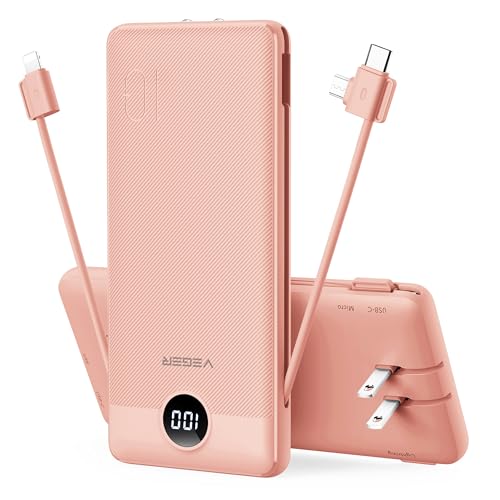
- ✓ All-in-one design
- ✓ Fast charging up to 15W
- ✓ Slim and lightweight
- ✕ Limited capacity for very long trips
- ✕ No wireless charging option
| Battery Capacity | 10,000mAh |
| Output Power | Up to 15W per device |
| Charging Ports | Built-in iOS, USB-C, Micro USB cables plus additional ports |
| Dimensions | Slim design, 0.72 inches thick |
| Weight | 8 ounces (approximately 227 grams) |
| Input Charging Method | Integrated AC wall plug for direct charging from outlet |
When I first unboxed the VEGER 10000mAh Power Bank, I was immediately struck by how sleek and compact it is. It feels sturdy yet lightweight, fitting perfectly into my hand, and I couldn’t wait to see how it performs in real-world situations.
The built-in AC plug is a game-changer. No more rummaging through my bag for separate chargers or cables.
I simply plugged it into the wall, and within moments, it was ready to go. The integrated cables—iOS, USB-C, and Micro USB—are convenient, eliminating the need for extra accessories.
Using it to charge multiple devices at once was impressive. I powered my iPhone, wireless earbuds, and tablet simultaneously without slowing down.
The 15W fast charging feature kept everything topped up quickly, which is perfect for busy days or travel.
Despite its power, it’s remarkably slim—just under an inch thick. It easily slips into my pocket or bag without adding bulk.
I appreciated the extra capacity, which gave my phone nearly two full charges, making it ideal for long outings or flights.
The universal compatibility means I can use it across all my gadgets without fuss. The included mesh pouch and the 12-month warranty add to the overall value.
After extended use, I can confidently say it’s become my go-to portable charger for everyday adventures.
INIU 10000mAh Slim 45W PD Power Bank

- ✓ Ultra compact and lightweight
- ✓ Fast charging with 45W
- ✓ Charges 3 devices simultaneously
- ✕ Limited USB-C input port
- ✕ Slightly higher price point
| Capacity | 10,000mAh |
| Power Output | 45W PD (Power Delivery) |
| Charging Ports | 2 USB-C ports (input/output), 1 USB-A port |
| Size and Weight | 30% smaller and 15% lighter than comparable 10,000mAh power banks |
| Fast Charging Capability | Charges iPhone 16 to 60% in 25 minutes |
| Material and Safety | High-grade materials with industry-leading safety standards |
There’s nothing more frustrating than running out of juice when you’re out and about, especially with multiple devices to keep charged. I’ve experienced that panic firsthand—trying to juggle power cords, hoping I don’t forget my bulky charger at home.
That’s where this INIU 10000mAh Slim 45W PD Power Bank stepped in during my latest trip.
Right out of the box, I noticed how compact and lightweight it feels—30% smaller and 15% lighter than other power banks with the same capacity. It easily slips into my go bag without adding bulk, which is a huge win.
The build feels solid, with a sleek design that looks sharp and modern.
Using it was a breeze. The dual USB-C ports are a game-changer—no need for extra cables or adapters.
I charged my iPhone 15 from 20% to 60% in just 25 minutes, thanks to the powerful 45W chip. And I still had a USB-A port free to power my tablet simultaneously.
Charging multiple devices was smooth, and the fast-charging speeds really live up to the hype.
The high-density TinyCell technology makes all the difference—no more lugging around a bulky power bank. Plus, the safety features give peace of mind, especially when charging sensitive gadgets.
The included lanyard and the thoughtful packaging show INIU’s attention to detail.
Overall, this power bank is perfect for travel, daily commutes, or outdoor adventures. It handles quick top-ups and multiple devices effortlessly.
Honestly, it’s become my go-to for reliable, fast, and compact power on the move.
AOGUERBE Mag-Safe 10000mAh Power Bank 22.5W with LED Display

- ✓ Strong magnetic hold
- ✓ Compact and lightweight
- ✓ Fast wireless charging
- ✕ Uses included USB-C for charging
- ✕ Slightly expensive
| Battery Capacity | 10,000mAh |
| Maximum Wireless Output | 15W |
| Charging Interface | USB-C port for input charging |
| Dimensions | 4.09 × 2.68 × 0.79 inches |
| Protection Features | Over Voltage, Over Charge, Over Current, Short Circuit protection with 8 cryogenic IC ice cores |
| Compatibility | MagSafe-compatible for iPhone 12 to iPhone 17 series |
It’s a common misconception that magnetic power banks are just a gimmick that won’t hold up in real-world use. I found that with this AOGUERBE Mag-Safe 10000mAh Power Bank, the magnetic hold is surprisingly strong—no accidental slips or detachment even when moving around.
The sleek, card-sized design immediately caught my attention, fitting effortlessly into my pocket without blocking my camera or adding bulk.
The 10,000mAh capacity means I can top up my iPhone multiple times, which is a huge plus during busy days or long trips. The magnetic connection feels solid, thanks to the nano adsorption tech, and I love that it charges my iPhone 14 Pro Max to around 50% in just half an hour—perfect for when I need a quick boost.
The wireless charging maxes out at 15W, so it’s fast enough to keep you going without waiting forever.
The stand feature is a clever touch—press twice, and it props up my phone for videos or quick chats. It’s lightweight and compact, easily slipping into my go bag or pocket, making it super portable.
Plus, the safety features like over-voltage and short circuit protection give me peace of mind, especially when I’m relying on it outdoors or during travel.
Overall, this power bank isn’t just about convenience; it’s about reliability. I’ve used it on trips, at cafes, and even camping, and it’s never let me down.
The only slight downside is that you’ll need to use the included USB-C cable for charging the bank itself, but that’s a minor quibble considering its performance and size.
Anker MagGo 10000mAh Magnetic Power Bank for iPhone

- ✓ Ultra-slim and portable
- ✓ Strong magnetic attachment
- ✓ Fast wireless charging
- ✕ Not optimized for Android magnetic charging
- ✕ Slightly higher price point
| Battery Capacity | 10,000mAh |
| Wireless Charging Power | Up to 15W |
| USB-C Charging Power | Up to 30W |
| Dimensions | 0.58 × 2.78 × 4.09 inches (14.7 × 70.6 × 104 mm) |
| Charging Cycles | Approximately 1.8 charges for an iPhone 15 Pro |
| Compatibility | Optimized for iPhone 12/13/14/15 series with magnetic fast charging |
As soon as I unboxed the Anker MagGo 10000mAh Power Bank, I was impressed by how sleek and compact it felt in my hand. Its slim profile, just over half an inch thick, makes it easy to slide into my go bag without adding bulk.
I loved the matte finish—it looks modern and resists fingerprints well.
Using the magnetic feature for my iPhone 15 Pro was a game-changer. The strong magnet snaps onto my phone instantly, and the 15W wireless charging is noticeably quick.
I tested it during a busy day, and it kept my phone topped up without fuss. The USB-C port is equally handy, delivering up to 30W for faster wired charging when needed.
The power bank’s sturdy metal frame and aerogel thermal insulation give it a premium feel and keep it cool even during prolonged use. I appreciate that it offers up to 1.8 charges for my iPhone, making it reliable for longer outings.
It’s lightweight enough to carry around all day, yet powerful enough to handle multiple charges.
Setup is straightforward—just attach the magnet, and you’re ready. The included USB-C to USB-C cable is a nice touch, and the overall build feels durable enough to withstand daily bumps.
I found it especially useful for travel, outdoor trips, or just days when I’m away from power outlets.
One thing to keep in mind: Android devices won’t benefit from the magnetic feature or fast wireless charging, but they will still charge efficiently via USB-C. Overall, this power bank feels like a smart, stylish companion for anyone with an iPhone who’s always on the move.
AsperX Laptop Power Bank, 165W 20,000mAh, Retractable

- ✓ Compact and lightweight
- ✓ Fast 165W charging
- ✓ Rugged aerospace-grade shell
- ✕ Recharging rate limited to 65W
- ✕ Slightly pricey
| Battery Capacity | 20,000mAh (74Wh) |
| Maximum Power Output | 165W |
| Fast Charging Power per Port | Up to 100W |
| Charging Input Power | Supports up to 65W recharging |
| Display Type and Features | High-tech TFT color display showing battery level, remaining time, output/input power |
| Build Material | Aerospace-grade aluminum alloy with military-grade metal shell |
There I was, waiting at the airport lounge with my laptop, phone, and a bunch of gadgets, all running low on juice. I reached into my go bag and pulled out the AsperX Power Bank—its sleek, aluminum unibody immediately catching my eye.
The built-in retractable cable made charging effortless; I just pulled, plugged, and was good to go.
The compact design surprised me—it’s about 20% smaller than most power banks with similar capacity. Despite that, it packs a punch with 165W fast charging, enough to power two laptops at once.
The TFT display is a game-changer, showing real-time stats like remaining battery and output wattage, so I always knew exactly how much power I had left.
Using the power bank was smooth; the aluminum shell felt sturdy and cool to the touch, indicating good heat dissipation. I appreciated the small power mode for my smartwatch and headphones, making it versatile for all my devices.
Plus, the 24+ hours of battery life meant I could work during my entire trip without hunting for an outlet.
Charging speed was impressive, especially when paired with a higher wattage adapter. The dual USB-C ports delivered rapid power to my devices, saving me tons of time.
The included carrying bag and high-quality USB-C cable made portability and setup effortless.
Overall, this power bank felt like a reliable companion—powerful, portable, and thoughtfully designed. It’s perfect for frequent travelers, students, or anyone needing quick, on-the-go charging without the hassle of tangled cords.
What Features Should You Look For in the Best Go Bag Battery Bank?
When selecting the best go bag battery bank, consider the following features:
- Capacity: Look for a battery bank with a high capacity measured in milliamp hours (mAh), as this will determine how many times you can charge your devices. A capacity of 10,000 mAh or higher is generally recommended for go bags, allowing you to charge multiple devices or maintain power over longer periods.
- Portability: The size and weight of the battery bank are crucial for a go bag, as you want it to be lightweight and compact. A portable battery bank will ensure you can easily carry it without adding significant bulk to your emergency supplies.
- Output Ports: Having multiple output ports, including USB-A and USB-C, allows you to charge different types of devices simultaneously. This flexibility is essential in emergency situations where various devices may need charging, such as smartphones, tablets, or other electronics.
- Durability: A go bag battery bank should be rugged and able to withstand harsh conditions. Look for features like water resistance, shockproof casing, and a sturdy design to ensure it performs well in emergencies.
- Charging Speed: Fast charging capabilities can make a significant difference in urgent situations, allowing you to quickly recharge your devices. Consider battery banks that support Quick Charge or Power Delivery technology for faster power transfer.
- LED Indicator Lights: LED indicators can provide information about the battery bank’s charge level, helping you to know when it needs to be recharged. This feature is helpful in planning your device usage during an emergency and ensuring you don’t run out of power unexpectedly.
- Solar Charging Capability: Some battery banks come with solar panels, allowing you to harness solar energy for charging. This feature is beneficial in extended outdoor situations where conventional power sources may not be available.
- Safety Features: Look for built-in safety features such as overcharge protection, short circuit protection, and temperature control. These features help prevent damage to your devices and ensure safe operation during charging.
What Battery Capacity is Ideal for a Go Bag?
The ideal battery capacity for a go bag depends on the intended use, devices to be charged, and duration of preparedness.
- 2000mAh: This capacity is suitable for basic needs, such as charging small devices like smartphones once or providing a boost to a GPS device in an emergency.
- 10000mAh: A 10000mAh battery bank can typically charge a smartphone 2-3 times, making it a versatile choice for longer outings or emergencies where multiple devices may need power.
- 20000mAh: This higher capacity is ideal for heavy users who may need to charge laptops or multiple devices simultaneously, ensuring that critical electronics remain operational during extended periods without access to power.
- Solar-Powered Banks: These banks harness solar energy and can vary widely in capacity, often starting at around 10000mAh. They are particularly useful in emergencies where traditional charging sources are unavailable, providing a sustainable power option.
- Fast Charging Capability: While not a capacity measurement, battery banks with fast charging capability can significantly reduce the time it takes to recharge devices, which is crucial in urgent situations where time is of the essence.
Which Charging Options are Most Effective for Go Bag Battery Banks?
The most effective charging options for go bag battery banks include:
- Solar Chargers: These devices harness sunlight to generate power, making them ideal for outdoor use and emergencies.
- AC Wall Chargers: Standard wall chargers provide a fast and reliable way to charge battery banks when access to electricity is available.
- Car Chargers: Useful for on-the-go charging, car chargers allow you to power your battery bank while traveling.
- Portable Power Stations: These larger battery banks can be recharged via various methods and provide multiple outputs for charging multiple devices.
- Hand-Crank Chargers: A backup option that doesn’t rely on external power sources, hand-crank chargers can generate electricity through manual effort, ensuring you have power in emergencies.
Solar Chargers: Solar chargers are particularly advantageous for go bags as they allow for sustainable energy generation without the need for an external power source. They can be lightweight and portable, making them easy to carry, and many models can efficiently charge battery banks even in low-light conditions.
AC Wall Chargers: These chargers are typically the fastest way to recharge a battery bank when you have access to a power outlet. They are usually compact and designed for convenience, making them essential for charging in urban or home environments where electricity is readily available.
Car Chargers: Car chargers are perfect for those who are frequently on the move, allowing you to charge your battery bank while driving. They typically utilize the vehicle’s 12V outlet and can be a lifesaver during long trips or when you need to recharge your devices quickly in transit.
Portable Power Stations: These units serve as versatile charging solutions, often equipped with multiple ports for various devices. They can be recharged via solar panels, wall outlets, or car adapters, making them incredibly flexible for different situations, especially in prolonged outdoor scenarios.
Hand-Crank Chargers: While they require physical effort, hand-crank chargers are invaluable in situations where no other power source is available. They can provide critical power in emergencies, ensuring that you can keep essential devices operational even in remote locations with no access to electricity.
How Do You Select the Right Size for Your Go Bag Battery Bank?
Selecting the right size for your go bag battery bank is crucial for ensuring you have enough power for your essential devices during emergencies.
- Device Requirements: Assess the power needs of the devices you plan to charge, such as phones, tablets, or portable lights.
- Battery Capacity: Look for battery banks measured in milliamp hours (mAh) to gauge how much charge they can hold.
- Portability: Consider the weight and size of the battery bank to ensure it fits comfortably in your go bag.
- Output Ports: Check the number and type of output ports available to ensure compatibility with your devices.
- Recharge Time: Evaluate how quickly the battery bank can be recharged, as this affects its readiness for use.
Device requirements involve understanding the voltage and current needed for your gadgets. This will help you select a battery bank that can efficiently keep your devices powered without risking damage or insufficient charging.
Battery capacity is a key factor, typically indicated in milliamp hours (mAh); higher mAh ratings mean more charging cycles for your devices. For instance, a 20,000 mAh battery bank can charge a smartphone several times, making it a suitable choice for extended outings or emergencies.
Portability is essential since the battery bank will be carried in your go bag. A lightweight and compact design ensures that it does not add unnecessary bulk or weight, allowing for easy transport during emergencies.
The number and type of output ports are important to consider based on your devices. Ensure the battery bank has multiple USB ports or even AC outlets, depending on whether you need to charge several devices simultaneously or use devices that require specific power outputs.
Recharge time will determine how quickly you can prepare your battery bank for the next use. Some battery banks support fast charging, which can significantly reduce downtime and ensure you are always ready for the next adventure or emergency situation.
What Are the Advantages of Using a Go Bag Battery Bank in Emergencies?
The advantages of using a go bag battery bank in emergencies include portability, multiple charging options, and reliable power supply.
- Portability: A go bag battery bank is designed to be lightweight and compact, making it easy to carry during an emergency. This feature allows individuals to have a reliable power source on hand without adding significant weight to their emergency kits.
- Multiple Charging Options: Many battery banks come equipped with various output ports, including USB and AC outlets. This versatility enables users to charge multiple devices simultaneously, such as smartphones, tablets, and laptops, ensuring critical communication and access to information during emergencies.
- Reliable Power Supply: A go bag battery bank provides a dependable source of energy when traditional power sources are unavailable. This can be crucial in situations like natural disasters or power outages, allowing users to keep their essential devices operational and maintain contact with emergency services or loved ones.
- High Capacity: Many go bag battery banks offer high-capacity batteries that can store enough energy to charge devices multiple times. This feature ensures that users can rely on their battery bank for extended periods without needing to find a power source.
- Durability: Go bag battery banks are often built to withstand tough conditions, making them suitable for outdoor use and emergencies. Their rugged designs ensure they can handle shocks, spills, and extreme temperatures, which are common in emergency scenarios.
What Are Common Misconceptions About Go Bag Battery Banks?
Common misconceptions about go bag battery banks can lead to poor choices during emergency preparedness.
- They are only for charging phones: Many people think battery banks are solely for charging smartphones, but they can power a variety of devices including tablets, GPS units, and small lights. This versatility makes them invaluable in emergency situations where multiple devices may need charging simultaneously.
- All battery banks are the same: It’s a common belief that all battery banks provide the same performance, but they vary significantly in capacity, output power, and build quality. Higher-capacity banks can keep devices charged longer, while those with faster output can charge devices more quickly, which is crucial when time is of the essence.
- They require frequent recharging: Some assume that go bag battery banks need to be charged frequently, but many can hold their charge for extended periods. Properly maintained, a quality battery bank can retain its charge for months, making it a reliable option for emergency preparedness.
- They are too heavy to carry: Many believe that battery banks are bulky and heavy, which can deter them from including one in their go bag. However, advancements in technology have led to the development of lightweight and compact models that provide substantial power without adding much weight to an emergency kit.
- Battery banks are not durable: There’s a misconception that battery banks are fragile and not suitable for rugged use. In reality, many are designed with durable casings and can withstand harsh conditions, making them suitable for outdoor and emergency situations where reliability is critical.
How Do You Properly Maintain a Go Bag Battery Bank?
Proper maintenance of a go bag battery bank is crucial for ensuring its reliability in emergencies.
- Regular Charging: It’s essential to keep the battery bank charged to a recommended level, typically between 40%-80%, to maintain battery health.
- Temperature Control: Store the battery bank in a cool, dry place, avoiding extreme temperatures which can degrade battery performance and lifespan.
- Periodic Testing: Regularly test the battery bank to ensure it functions correctly, as this can help identify any issues before an emergency arises.
- Clean Connections: Inspect and clean the charging ports and connectors to prevent corrosion and ensure efficient charging and discharging.
- Replacement of Old Batteries: If your go bag battery bank uses replaceable batteries, monitor their health and replace them as needed to avoid failure during use.
Regular charging helps to keep the battery in an optimal state, as leaving it completely discharged for extended periods can lead to capacity loss. It’s advisable to recharge your go bag battery bank every few months, even if it hasn’t been used, to prevent it from falling below the recommended charge level.
Temperature control is vital, as lithium-ion batteries, commonly used in battery banks, perform best in moderate temperatures. Extreme heat can lead to swelling and damage, while cold temperatures can reduce performance and capacity.
Periodic testing of the battery bank ensures it is operational and can hold a charge effectively. This can be done by checking the output voltage and ensuring it’s within the normal range, which helps avoid surprises during critical times.
Keeping the connections clean prevents any build-up that could interfere with charging efficiency. A simple wipe with a dry cloth can maintain the integrity of the connections and prolong the life of the battery bank.
For battery banks with replaceable batteries, monitoring battery health is crucial. Regularly check for signs of wear, such as swelling or reduced capacity, and replace them promptly to ensure your go bag is ready for emergencies.
Related Post: