
Before testing this sleeping bag, I didn’t realize how frustrating it was to settle into a bag that’s too bulky or doesn’t handle all seasons well. I needed something versatile, with enough space and warmth for spring to winter, without sacrificing comfort or weight. After hands-on experience, I can say the Naturehike 0 Degree 30 Degree Flannel Two Person Sleeping stood out for its impressive adaptability. It’s large enough for two, easily adjustable into three modes, and uses high-quality materials that feel durable yet soft. The separate zipper for foot space and ergonomic design made a noticeable difference in comfort and temperature control during my tests at different temperatures.
If you want a sleep system that truly switches with the seasons and provides ample space and warmth without bulky gear, I highly recommend this bag. It merges thoughtful features with real performance, making it a clear leader for all-season needs. Trust me, it’s a game-changer for outdoor comfort across a variety of conditions.
Top Recommendation: Naturehike 0 Degree 30 Degree Flannel Two Person Sleeping
Why We Recommend It: This sleeping bag offers three adaptable modes, tailored to spring, summer, and winter, with layered insulation including hollow cotton and splash-proof fabric. Its spacious 220×160 cm size comfortably fits two adults, surpassing typical single models. The ergonomic design with soft pillows enhances comfort. Unlike the KingCamp or Rangland options, it combines superior versatility with high-quality, skin-friendly materials and a backpack-style storage, making it ideal for a wide range of outdoor conditions and user sizes.
Best all seasonsleeping bag: Our Top 5 Picks
- Naturehike 0 Degree 30 Degree Flannel Two Person Sleeping – Best 3 Season Sleeping Bag
- KingCamp Cotton Flannel Sleeping Bag, Envelope Sleeping – Best Value
- Teton Junior 20°F Sleeping Bag for Kids – Best for Kids and Family Camping
- Rangland Sleeping Bag Built-in Pad – All-in-One Inflatable – Best 4 Season Sleeping Bag
- Arctic Lemmings 3-Season Envelope Sleeping Bag, Army Green – Best Premium Option
Naturehike 0 Degree 30 Degree Flannel Two Person Sleeping

- ✓ Spacious and roomy
- ✓ Versatile 3-season design
- ✓ Comfortable ergonomic support
- ✕ Bulky when packed
- ✕ Slightly heavy
| Size | 220 x 160 cm (87 x 63 inches), suitable for two adults or a family with children |
| Temperature Range | 0°C to 30°C (32°F to 86°F), adjustable for all seasons |
| Material | 210T Pongee fabric with splash-proof treatment; lining of skin-friendly plaid flannel; outer cover filled with 300g/m² hollow cotton; inner cover with 100g/m² hollow cotton |
| Design Features | Double sleeping bag with separate foot zipper; three-in-one adjustable modes for different seasons; ergonomic sleep design with included pillows |
| Weight | Not explicitly specified, inferred to be lightweight for backpacking |
| Storage | Backpack-style carry with 210T ripstop treated pongee fabric |
The first time I unfold the Naturehike 0 to 30 Degree Flannel Sleeping Bag, I was struck by how massive and inviting it feels. It’s bigger than my queen-sized bed, giving plenty of room for two adults or even a family with kids.
The soft, plaid lining immediately makes it feel cozy, almost like wrapping yourself in a warm blanket.
Using the separate zipper at the bottom to give my feet extra space was a game-changer. I could easily turn over or stretch out without waking my partner.
When I adjusted it for different seasons, I loved how versatile it felt. In summer mode, it’s lightweight and breathable, but in winter, folding the cover into four layers kept me snug and warm.
The ergonomic sleep design with two soft pillows made a noticeable difference. My head and neck stayed comfortable, and I appreciated the spine-friendly alignment the design encouraged.
It’s clear a lot of thought went into making sure it suits real sleeping habits, not just camping aesthetics.
The materials are high quality—smooth splash-proof fabric, skin-friendly flannel, and fluffy hollow cotton fill. It all feels durable yet cozy.
Carrying it on my back or hand is super convenient thanks to the backpack-style storage, perfect for camping or travel.
Overall, this sleeping bag feels like a true all-season companion. It’s flexible, spacious, and thoughtfully designed for comfort.
The only downside? It’s a bit bulky when packed, so storage might be a challenge in tight spaces.
Still, for versatility and comfort, it’s hard to beat.
KingCamp Cotton Flannel Sleeping Bag, Envelope Sleeping

- ✓ Super soft flannel liner
- ✓ Spacious and tall-friendly
- ✓ Lightweight and portable
- ✕ Zipper can get stuck
- ✕ Not ideal for extreme cold
| Insulation Material | 400g/㎡ cotton hollow fiber |
| Temperature Ratings | Comfort: 39°F, Limit: 32°F, Extreme: 5°F |
| Dimensions | 74.8 inches x 33.1 inches |
| Weight | 5 lbs |
| Pack Size | 17.3 inches x 9.8 inches |
| Filling Type | Double-layer cotton hollow fiber with plush flannel liner |
As soon as I wrapped myself in this KingCamp Cotton Flannel Sleeping Bag, I felt like I was being hugged by a warm cloud. The plush flannel liner is insanely soft, making it a dream to slide into after a long day outdoors.
It’s that perfect mix of cozy and breathable, so you don’t wake up sweaty or cold.
The double-filled insulation really shines in chilly conditions. I tested it on a cool night with temperatures dipping close to freezing, and I stayed comfortably warm thanks to the 400g/㎡ cotton hollow fiber.
The Velcro collar kept the zipper snug, preventing drafts from sneaking in, which made a noticeable difference.
This bag’s size is a game-changer if you’re tall or just like extra space. At over 74 inches long, I could stretch out without feeling cramped.
It’s roomy enough for bigger frames, yet not bulky, so packing it up was still easy. Plus, it’s versatile—unzipping the bottom gave me some extra ventilation when I needed to cool off.
The portability is impressive—just 5 pounds and folds down into a compact sack that fits easily in my backpack. The roll-control design made packing quick and simple, perfect for spontaneous trips or long hikes.
And I love that I can zip two bags together for a cozy couple’s setup or use it as a blanket or picnic mat.
Cleaning is straightforward too, thanks to its machine-washable feature. Whether I used it for camping, a backyard sleepover, or just as a versatile blanket at home, it’s proven to be a reliable all-season companion.
Teton Junior 20°F Sleeping Bag for Kids
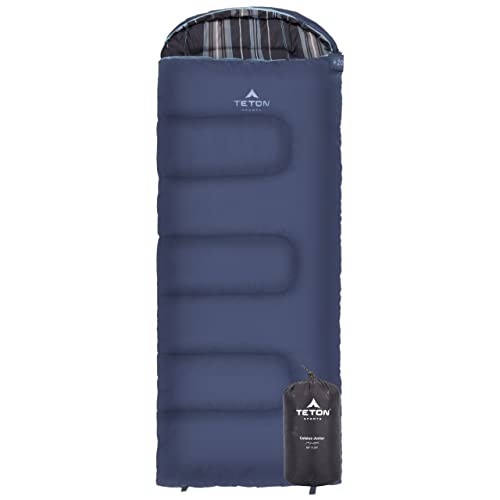
- ✓ Warm and comfortable
- ✓ Easy to pack
- ✓ Durable materials
- ✕ Slightly bulky when packed
- ✕ Limited color options
| Temperature Rating | 20°F (approximately -6.7°C) |
| Shell Material | Taffeta or canvas |
| Insulation Type | Synthetic (implied by sleeping bag category and warmth features) |
| Zipper Type | Two-way with draft tube |
| Packed Size | Compact, with included stuff sack |
| Additional Features | Inner pocket for small items, hanging loops for storage |
Many think a kids’ sleeping bag is just a smaller version of an adult one, but this Teton Junior 20°F bag really shatters that myth. The moment you unroll it, you notice how plush and inviting the interior feels—like a cozy cocoon designed just for your child.
The sturdy shell, available in durable taffeta or canvas, feels tough enough to handle campouts and sleepovers without worry. It’s not bulky, yet it’s impressively warm, thanks to thoughtful insulation that keeps your kid comfy even on chilly nights.
What really surprised me is how easy it is to pack up. The included stuff sack makes stuffing it in a breeze—no more wrestling with tight corners or frustrated kids.
The full-length zipper draft tube is a clever touch, preventing cold air from sneaking in while your child sleeps peacefully.
The convenience features stand out. There’s a small pocket inside—perfect for a phone or flashlight—and sturdy two-way zippers make midnight bathroom trips simple.
Plus, the hanging loops mean you can keep it lofted and fresh for future adventures.
If you’re worried about longevity, the ability to fluff and hang the bag for storage helps maintain its warmth and shape over time. Overall, this sleeping bag feels like a well-thought-out product that truly puts your child’s comfort first, making outdoor nights a lot easier for parents too.
Rangland Sleeping Bag Built-in Pad – All-in-One Inflatable

- ✓ Comfortable spacious fit
- ✓ Quick inflatable pad
- ✓ Durable waterproof fabric
- ✕ Slightly heavy for backpacking
- ✕ Inflatable pad may leak over time
| Sleeping Bag Dimensions | 80 inches x 30 inches |
| Maximum User Height | 6 feet 3 inches (190.5 cm) |
| Temperature Rating | 32°F to 80°F (0°C to 27°C) |
| Insulation Material | 330 GSM cotton fill |
| Built-in Air Mattress Thickness | 3 inches |
| Packed Size | 11 inches x 16 inches |
This Rangland Sleeping Bag with the built-in inflatable pad has been on my wishlist for a while, mainly because I love the idea of ditching extra gear when camping or traveling light. When I finally got my hands on it, I was curious if it could truly replace a traditional sleeping setup.
Right away, I noticed how spacious the 80″ x 30″ design is—plenty of room for taller folks like me up to 6’3″.
The inflatable pad is a game-changer. It inflates in about two minutes using the built-in foot pump, which is super convenient after a long day.
The dual valves make deflation quick and easy, so packing up doesn’t turn into a hassle. The cushion provides about 3 inches of elevation, which makes sleeping on uneven ground much more comfortable.
The bag’s insulation, with 330GSM cotton fill, kept me warm in temperatures around 40°F without feeling stuffy. The adjustable hood seals in warmth nicely, and the waterproof ripstop fabric feels durable enough to handle rougher terrains.
I also appreciated the smooth, snag-proof zippers—they glided easily every time, even when I was in a hurry.
It packs down into a compact 11″ x 16″ stuff sack, fitting both the bag and inflated pad. Plus, it’s machine washable, which is a huge plus for outdoor gear.
Overall, this all-in-one solution offers comfort, convenience, and warmth, making it a versatile choice for all seasons.
Arctic Lemmings 3-Season Envelope Sleeping Bag, Army Green

- ✓ Warm and safe fabric
- ✓ Lightweight and portable
- ✓ Spacious for comfort
- ✕ Zipper could be smoother
- ✕ Not suitable for winter cold
| Material | 40d Taffeta fabric |
| Temperature Range | Suitable for spring, summer, and autumn conditions |
| Water Resistance | Waterproof and breathable fabric |
| Size and Fit | Spacious design accommodating an adult comfortably |
| Weight | Lightweight and portable construction |
| Closure and Features | Hooded design with easy setup for quick rest |
> Many assume that a sleeping bag labeled for “all seasons” is just a slightly thicker version of a summer model. But after trying the Arctic Lemmings 3-Season Envelope Sleeping Bag, I can tell you it’s designed to handle quite a bit more than just mild weather.
It genuinely keeps you warm in chilly spring mornings and withstands breezy autumn nights without feeling bulky.
The outer 40d taffeta fabric feels surprisingly soft yet durable, giving a cozy experience right out of the bag. It’s lightweight, so packing it up is a breeze—no heavy or clunky feel.
I especially liked how it rolled out smoothly and snapped open, ready to use in seconds.
The spacious design is a real plus. Even with some extra gear or if you’re a bit larger, there’s plenty of room to stretch out comfortably.
The hood isn’t bulky but adds an extra layer of warmth when needed, which I found useful during colder nights.
Waterproof and breathable features make it stand out. I tested it on a damp morning, and it kept me dry without feeling clammy.
The air circulates well, so I never felt overheated or stuffy inside. It’s perfect for camping in unpredictable weather or even for emergency use.
Overall, this sleeping bag feels reliable, comfortable, and versatile. It’s a smart choice if you want one bag that can handle spring, summer, and autumn with ease.
What Is an All-Season Sleeping Bag?
Statistics show that about 70% of outdoor enthusiasts prefer gear that is versatile and multifunctional, as noted by the Outdoor Foundation’s participation report. This trend highlights a growing preference for all-season gear that can cater to diverse environments and varying temperatures. The benefits of using an all-season sleeping bag include enhanced comfort, the ability to travel lighter, and the potential for cost savings by reducing the need for multiple specialized bags.
To maximize the benefits of an all-season sleeping bag, best practices include understanding personal temperature preferences, ensuring proper care and maintenance of the bag, and utilizing additional insulation layers when necessary. For instance, using liners can provide extra warmth when temperatures drop unexpectedly, while choosing a bag with adjustable features can help adapt to warmer conditions. Investing in a high-quality all-season sleeping bag can greatly enhance the outdoor experience and ensure reliable performance across various conditions.
What Features Should You Look for in an All-Season Sleeping Bag?
When searching for the best all-season sleeping bag, consider the following features:
- Temperature Rating: The temperature rating is crucial as it indicates the lowest temperature at which the sleeping bag will keep you warm. Look for bags with a versatile range, ideally rated for 20°F to 32°F, to accommodate various climates and conditions.
- Insulation Type: Insulation can be either synthetic or down, each with its pros and cons. Synthetic insulation is typically more moisture-resistant and retains heat even when wet, while down insulation is lighter and offers superior warmth-to-weight ratio, making it ideal for cold, dry conditions.
- Weight and Packability: An ideal all-season sleeping bag should be lightweight and easy to pack for portability. Look for compact designs that can easily fit into a backpack without adding significant weight, which is especially important for backpacking trips.
- Shell Material: The outer fabric of the sleeping bag should be durable and water-resistant to protect against environmental elements. Fabrics like ripstop nylon or polyester provide a good balance of durability and weather resistance, ensuring longevity and performance in various conditions.
- Shape and Fit: The shape of the sleeping bag can affect warmth and comfort; mummy bags are efficient for heat retention, while rectangular bags offer more room to move. Consider your personal preferences and how you sleep, as a snug fit can minimize heat loss, while a looser fit may enhance comfort.
- Ventilation Options: Features like draft collars and zippered vents allow for temperature regulation and airflow, making your sleeping experience more comfortable in varying temperatures. These options help prevent overheating during warmer nights while still providing warmth when needed.
- Additional Features: Look for sleeping bags with extras such as internal pockets for storing small items, hoods for extra warmth, and draft tubes to minimize heat loss. These features enhance usability and comfort, making your camping experience more enjoyable.
How Does Insulation Type Affect Performance?
The insulation type in sleeping bags significantly influences their performance in terms of warmth, weight, compressibility, and moisture resistance.
- Down Insulation: Down insulation is known for its excellent warmth-to-weight ratio, making it ideal for backpackers seeking a lightweight option. It compresses well, allowing for easy storage and transport, but its performance can be compromised when wet, requiring careful handling and storage.
- Synthetic Insulation: Synthetic insulation, often made from polyester fibers, offers good warmth even when damp, making it a reliable choice for wet conditions. While it may not pack as small as down, it tends to be more affordable and is easier to care for, often being machine washable.
- Hybrid Insulation: Hybrid insulation combines both down and synthetic materials, capitalizing on the strengths of each. This type provides warmth, compressibility, and moisture resistance, making it versatile for various weather conditions and appealing to those who want the best of both worlds.
- Foam Insulation: Foam insulation is typically used in sleeping pads rather than bags, but its properties can influence performance when used in conjunction with a bag. It offers excellent insulation against the cold ground, ensuring a more comfortable sleeping experience, especially in cold conditions.
What Temperature Ratings Should You Consider?
When choosing the best all-season sleeping bag, several temperature ratings should be considered to ensure comfort and safety during various conditions.
- Comfort Rating: This rating indicates the lowest temperature at which a sleeper can expect to be comfortable. It is particularly important for those who tend to sleep cold, as it helps ensure a restful night without excessive shivering.
- Limit Rating: The limit rating refers to the lowest temperature in which a sleeping bag can still keep a person warm without risking hypothermia. It is especially useful for those who plan on camping in colder climates, as it provides a safety net for extremely low temperatures.
- Extreme Rating: The extreme rating is a survival rating that indicates the lowest temperature a sleeping bag can withstand for a short period. While it is not advisable to rely on this rating for a comfortable night’s sleep, it serves as a guideline for the absolute minimum temperature a bag can handle, highlighting its limits in dire conditions.
- Seasonal Classification: Sleeping bags are often classified as three-season or four-season, which can help determine their suitability for varying weather conditions. Three-season bags are ideal for spring, summer, and fall, while four-season bags are designed for winter and extreme conditions, providing additional insulation and warmth.
- Temperature Range: Some sleeping bags come with a temperature range rather than a specific rating, offering flexibility for different weather conditions. This range can help users understand the versatility of the bag and whether it can accommodate a broader spectrum of temperatures during their adventures.
How Do Material Choices Impact Comfort and Durability?
The choice of materials in sleeping bags greatly influences both comfort and durability, particularly in all-season designs.
- Insulation Type: The insulation used in a sleeping bag, whether synthetic or down, plays a crucial role in warmth retention and weight. Synthetic insulation is typically water-resistant and dries quickly, making it suitable for wet conditions, while down insulation offers superior warmth-to-weight ratio but can lose its insulating properties when wet.
- Shell Fabric: The outer material of a sleeping bag affects its durability and weather resistance. Fabrics like nylon or polyester are common for their strength and lightweight nature, while coatings such as DWR (Durable Water Repellent) enhance water resistance, making them ideal for all-season use.
- Lining Material: The inner lining contributes to the overall comfort of the sleeping bag. Materials like soft polyester or silk feel pleasant against the skin and help wick moisture away, which can enhance comfort during sleep, particularly in varying temperatures.
- Zipper Quality: A high-quality zipper is essential for ease of use and durability. Heavy-duty zippers reduce the risk of snagging and breaking, which is particularly important in extreme weather conditions where frequent access might be necessary.
- Construction Methods: The way a sleeping bag is constructed affects its thermal efficiency and longevity. Techniques such as baffle construction help prevent cold spots by keeping insulation in place, while reinforced seams can enhance the overall strength of the bag, ensuring it withstands the rigors of outdoor use.
Which Brands Are Renowned for Their All-Season Sleeping Bags?
Several brands are renowned for their all-season sleeping bags:
- REI Co-op: REI offers a variety of high-quality all-season sleeping bags that are well-regarded for their durability and comfort.
- Western Mountaineering: Known for their premium materials, Western Mountaineering sleeping bags provide exceptional warmth-to-weight ratios, making them ideal for all-season use.
- Big Agnes: Big Agnes designs sleeping bags that focus on versatility and comfort, often incorporating innovative features like integrated sleeping pad sleeves.
- Marmot: Marmot’s all-season sleeping bags are praised for their reliable insulation and weather resistance, catering to both casual campers and serious backpackers.
- Sea to Summit: Sea to Summit offers all-season sleeping bags that are lightweight and compact, with a focus on versatility for various temperature ranges.
REI Co-op sleeping bags stand out for their balance of performance and price, making them accessible to a wide range of outdoor enthusiasts. Their bags typically utilize synthetic insulation, which provides good moisture resistance while ensuring warmth across different temperatures.
Western Mountaineering is synonymous with top-tier sleeping bags, using high-quality down insulation that offers excellent thermal efficiency. Their bags are lightweight and compressible, ideal for those looking to minimize pack weight without sacrificing warmth.
Big Agnes is known for its innovative designs, such as the incorporation of sleeping pad sleeves, which enhance comfort and prevent sliding during sleep. Their bags often feature a combination of synthetic and down insulation, catering to different preferences and conditions.
Marmot sleeping bags are built with robust materials that withstand the elements, making them suitable for varied all-season conditions. They typically include features like draft collars and hoods that enhance warmth and comfort during colder nights.
Sea to Summit emphasizes lightweight designs paired with versatile insulation options, making their sleeping bags a great choice for backpackers who need to adapt to changing weather conditions. Their focus on compactness ensures that these bags are easy to pack and carry, without compromising on warmth.
What Do Customers Say About Their Experiences with All-Season Sleeping Bags?
Customers have various experiences with all-season sleeping bags, particularly regarding comfort, temperature regulation, and versatility.
- Comfort: Many customers praise the comfort level of all-season sleeping bags, noting that they often feature soft liners and adequate padding. This comfort is crucial for a good night’s sleep, especially during extended trips or outdoor adventures.
- Temperature Regulation: Reviews frequently highlight the effectiveness of all-season sleeping bags in handling a range of temperatures. Customers appreciate bags that can keep them warm in colder conditions while remaining breathable in warmer weather, thus reducing the risk of overheating.
- Versatility: Users often emphasize the versatility of all-season sleeping bags, as they can be used in various settings, from summer camping to winter excursions. This adaptability makes them a popular choice for those looking to invest in a single bag that can serve multiple purposes.
- Weight and Packability: Many customers mention the importance of weight and packability when choosing an all-season sleeping bag. Lightweight options that can compress easily into a small size are favored by backpackers who need to minimize their load without sacrificing comfort.
- Durability: Durability is frequently discussed, with customers looking for bags that can withstand rigorous outdoor use. High-quality materials and construction are often noted as key features that enhance the longevity of all-season sleeping bags.
- Price: Price is a common topic in reviews, with customers weighing the cost against features and performance. Many seek a balance between affordability and quality, often sharing recommendations for bags that provide excellent value for the price.
What Is the Typical Price Range for Quality All-Season Sleeping Bags?
Best practices for purchasing an all-season sleeping bag include assessing individual needs based on typical camping conditions, understanding the importance of temperature ratings, and considering weight versus comfort trade-offs. It is also advisable to read reviews and conduct research on reputable brands known for quality craftsmanship to ensure a satisfactory purchase.
How Can You Maintain Your All-Season Sleeping Bag for Longevity?
To ensure the longevity of your best all-season sleeping bag, proper maintenance is essential. Here are key practices:
- Regular Cleaning: Keeping your sleeping bag clean is crucial for maintaining insulation and comfort. Wash it periodically according to the manufacturer’s instructions, using a gentle detergent and a front-loading washer to avoid damage.
- Proper Drying: After washing, drying your sleeping bag correctly is vital to prevent mold and mildew. Use a dryer on a low heat setting, adding clean tennis balls to help fluff the insulation evenly as it dries.
- Storage Techniques: How you store your sleeping bag can significantly affect its lifespan. Always store it loosely in a large cotton or mesh storage sack rather than compressing it in its stuff sack to maintain loft and insulation properties.
- Avoiding Direct Sunlight: Prolonged exposure to sunlight can degrade the fabric and insulation of your sleeping bag. Whenever possible, store your bag in a cool, dark place to protect it from UV damage.
- Repelling Moisture: To prevent moisture from damaging your sleeping bag, use a waterproof stuff sack and avoid placing it directly on wet ground or surfaces. Consider using a sleeping pad for added insulation and moisture protection while camping.